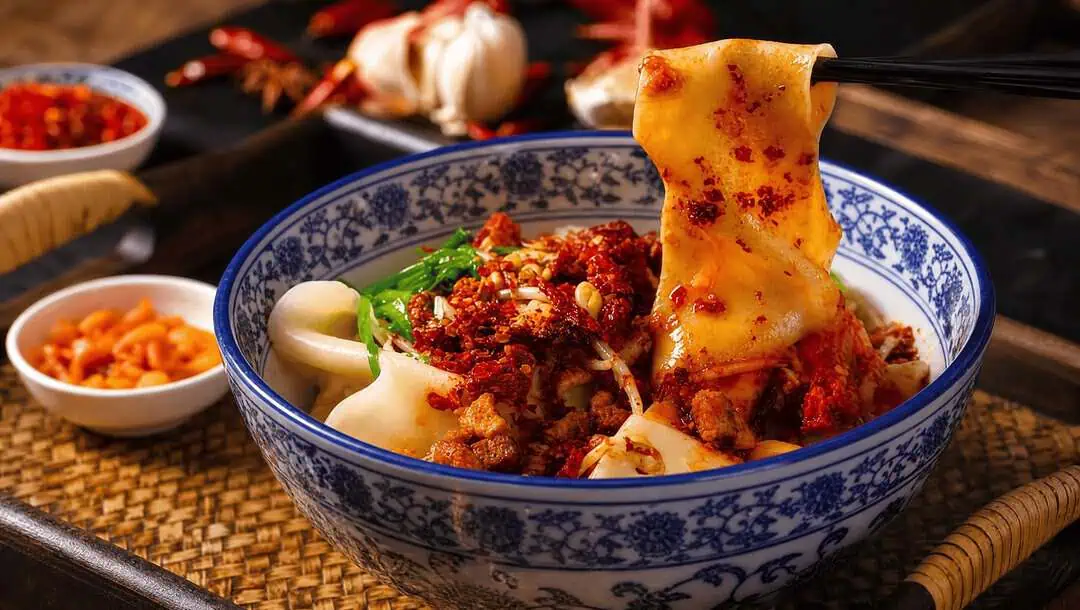
面条像裤带
Noodles as wide as a trouser belt
The first of Shaanxi's Eight Oddities: biángbiáng noodles, hand-pulled ribbons wider than a belt, one bowl of which is a full meal. Where the saying comes from and where to eat it today.
The short version
- Belt noodles = biángbiáng miàn (biángbiáng面), Shaanxi's signature hand-pulled noodle — ribbons 3–5 cm wide, often a meter long.
- The name is onomatopoeia: the dough is slammed on the board with a biáng! biáng! sound as it's stretched.
- One bowl is genuinely a meal — ordering two dishes for one person is a rookie mistake.
- Served dry with scallions, chili flakes and a final ladle of smoking-hot oil poured over the top (youpo, 油泼).
- Best zone: the noodle shops around Beilin and the Muslim Quarter's edges; our dish page lists verified addresses.
- The character biáng is so complex (58 strokes in the common form) that no phone can type it — you'll see it hand-painted on shop walls.
The oddity
Picture a noodle you could use as an actual belt. In Shaanxi, the signature noodle is not the thin ramen strand most visitors expect but biángbiáng miàn — hand-torn ribbons three to five centimeters wide and often a full meter long. Locals call them kùdài miàn (裤带面), literally "trouser-belt noodles," and the nickname is only half a joke: one ribbon folded on a spoon fills it completely.
The name comes from the sound of the making. The cook slams a slab of dough against the wooden board — biáng! biáng! — between stretches, a rhythm you can hear from the street before you see the shop. It is the only Chinese character most locals cannot write from memory: the common folk form runs some 58 strokes, a cubic puzzle of radicals meaning nothing on their own. Look for it painted in red on noodle-shop walls; photographing it is a Xi'an ritual.
Why belts, not strands
Guanzhong — the plain Xi'an sits on — is wheat country. For centuries the staple grain was flour, not rice, and farm logic favored the efficient version of everything: thick ribbons hold sauce better, pull faster in bulk, and survive the rough hand of a busy kitchen. A wide noodle also eats more like a meal, which mattered for laborers who got one long midday break in the fields.
Wheat宽 (width) became identity. Ask any Shaanxi grandparent about noodles and the conversation will drift to width within a minute — thin noodles, in the local joke, are "for watching."
Where to eat it today
Belt noodles are everywhere once you know the sign: biángbiáng面 painted large. For a first bowl, aim for the Han-style noodle shops around the Beilin district and the streets just outside the Muslim Quarter, where the classic order is youpo style — ribbons under a mound of scallion and chili flakes, finished tableside-style with a ladle of smoking oil that hits the chili with an audible sizzle.
Our biángbiáng noodles dish page has verified shops, prices and the ordering script. One bowl per adult is enough; add a cold side dish, not a second noodle.
The next oddity
Once the noodles have anchored you to the table, the pantry behind them holds oddity number two: a bread the size of a pot lid. Continue to pot-lid bread (guokui) — or start from the Eight Oddities overview.
Questions, answered
Is biángbiáng the same as trouser-belt noodles?
Yes — biángbiáng miàn is the sound-name, kùdài miàn (trouser-belt noodles) the shape-name. Same dish: wide wheat ribbons, usually served oil-tossed (youpo).
Can I watch the noodles being made?
Often, yes — many shops pull to order behind a counter or in view of the street. The dough-slam rhythm is loud on purpose; if you hear it, you're close.
How spicy is the classic bowl?
The chili is aromatic rather than fiery by default. Ask for 'bú là' (not spicy) and shops will go easy; the vinegar, not the heat, is the flavor you shouldn't skip.
Keep exploring
Hanfu costume rental & photoshoot guide
Renting a Tang-style costume and having your photo taken against 1,300-year-old backdrops is Xi'an's signature tourist experience — and unlike most signature tourist experiences, it's actually good value. A full outfit with hair and makeup runs ¥100–300, the streets are so used to costumed visitors that nobody bats an eye, and the night scenery does the heavy lifting. Here's how to do it without getting upsold.
Tang Dynasty show & dumpling banquet — worth it?
The Tang Dynasty Palace dinner show is Xi'an's longest-running tourist evening: a dumpling banquet followed by an hour of Tang court music and dance in a plush theater. It's polished, comfortable and unashamedly aimed at visitors — and whether it's ¥400 well spent depends entirely on who you are. Families and first-time visitors to China tend to love it; travelers chasing the raw and local should spend the evening at Ever-Bright City for free instead.
Xi'an at night: lights, shows & evening walks
Xi'an is a different city after dark — Tang-style streetscapes floodlit gold, a pagoda floating over fountain shows, gate towers glowing above the moat. The best of it is free: the Grand Tang Ever-Bright City pedestrian street alone is worth an evening, and the pagoda fountain show costs nothing. Add a late dinner in the Muslim Quarter and, in season, the open-air Song of Everlasting Sorrow, and your nights may outshine your days.