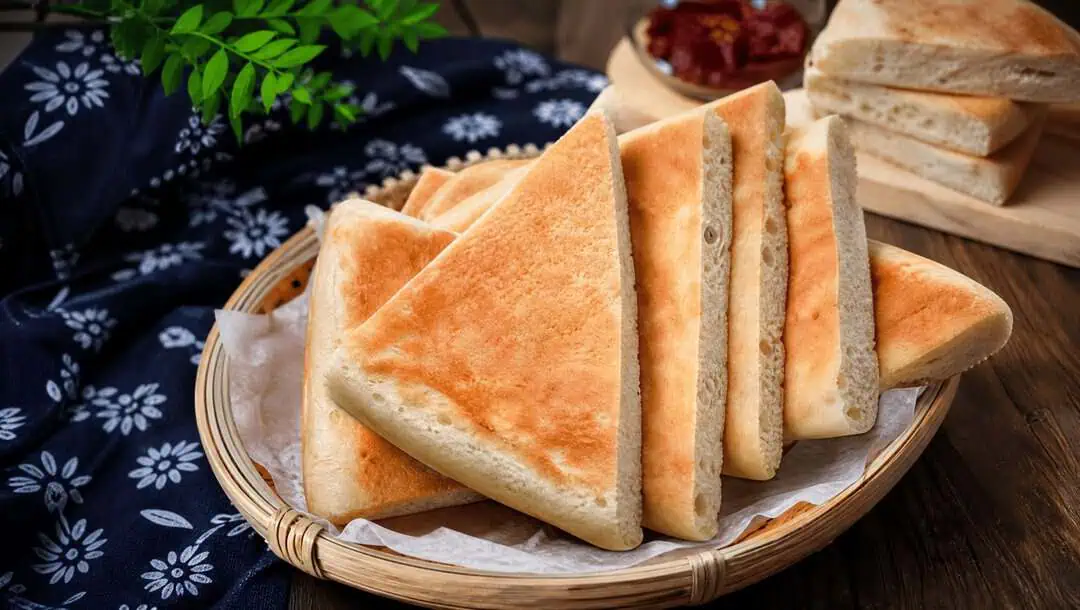
锅盔像锅盖
Bread as large as a pot lid
Oddity two: guōkuī, a slow-baked flatbread the diameter of a pot lid, hard-crusted enough to travel for days. A soldier's rations that became a Shaanxi staple.
The short version
- Guōkuī (锅盔) is a thick wheat flatbread, classically 30–40 cm across — the size of the pot lid it's named after.
- The crust is deliberately hard: the bread was made to survive journeys, and a whole one keeps for days.
- Best-known origin: Qianxian county outside Xi'an, where guokui is a point of civic pride.
- Eat it sliced thin, dipped or torn into soup; vendors sell wedges so you never need a whole disc.
- Find it in the Muslim Quarter's dry-goods shops and at morning markets by the slice.
- Full texture, taste and shop guide on our guokui dish page.
The oddity
Where most of China steams soft buns, Guanzhong bakes armor. Guōkuī — the name welds "pot" and "helmet" into one word — is a dense wheat disc baked slowly until the crust genuinely taps like a helmet. A traditional one spans a wok's diameter, weighs over a kilogram, and is sold by the wedge precisely because no single person needs the whole shield.
The surface is blistered and freckled with sesame or char; the crumb inside is dry, faintly sweet and almost bready-smoky from the long bake. It is bread built for logistics, not for softness — and that is exactly its charm.
Why bake a helmet
The standard story credits ancient soldiers: flour rations mixed on a shield or helmet lid and baked over low fire produced a loaf that survived a campaign. Whatever the exact origin, the economics held for centuries of cart travel and field work — hard bread that neither crushed nor spoiled carried Guanzhong's wheat wealth along its roads.
Qianxian, an hour west of Xi'an, remains the name on the sign: Qianxian guokui is the regional benchmark, thinner and crisper than the city versions.
Where to try it today
Skip the whole disc. Buy a wedge or half-moon slice at a Muslim Quarter dry-goods stall or a morning market, and eat it the local way: torn into hot soup or mutton paomo-style broth, where the dry crumb drinks the liquid and turns tender. Plain, it pairs with chili paste — which, as you'll read next, is itself a full dish here.
Shops, price ranges and the ordering script are on the guokui dish page.
The next oddity
Bread this sturdy needs something bold beside it. Oddity three is exactly that: a bowl of chili served as a dish in its own right. On to chili as a dish, or back to the Eight Oddities overview.
Questions, answered
Is guokui hard to bite?
The crust is firm but the interior gives; sliced thin it's pleasant to chew. In soup it softens fully. Don't judge it by sandwich standards — it's a different category of bread.
Can I bring one home as a gift?
Yes — that's a large part of why it exists. A vacuum-packed whole guokui keeps for days at room temperature and is a standard Shaanxi gift.
Guokui versus naan?
Both are baked flatbreads, but guokui is thicker, drier and unsweetened, with a much harder crust. Think field rations rather than tandoori fresh.
Keep exploring
Hanfu costume rental & photoshoot guide
Renting a Tang-style costume and having your photo taken against 1,300-year-old backdrops is Xi'an's signature tourist experience — and unlike most signature tourist experiences, it's actually good value. A full outfit with hair and makeup runs ¥100–300, the streets are so used to costumed visitors that nobody bats an eye, and the night scenery does the heavy lifting. Here's how to do it without getting upsold.
Tang Dynasty show & dumpling banquet — worth it?
The Tang Dynasty Palace dinner show is Xi'an's longest-running tourist evening: a dumpling banquet followed by an hour of Tang court music and dance in a plush theater. It's polished, comfortable and unashamedly aimed at visitors — and whether it's ¥400 well spent depends entirely on who you are. Families and first-time visitors to China tend to love it; travelers chasing the raw and local should spend the evening at Ever-Bright City for free instead.
Xi'an at night: lights, shows & evening walks
Xi'an is a different city after dark — Tang-style streetscapes floodlit gold, a pagoda floating over fountain shows, gate towers glowing above the moat. The best of it is free: the Grand Tang Ever-Bright City pedestrian street alone is worth an evening, and the pagoda fountain show costs nothing. Add a late dinner in the Muslim Quarter and, in season, the open-air Song of Everlasting Sorrow, and your nights may outshine your days.