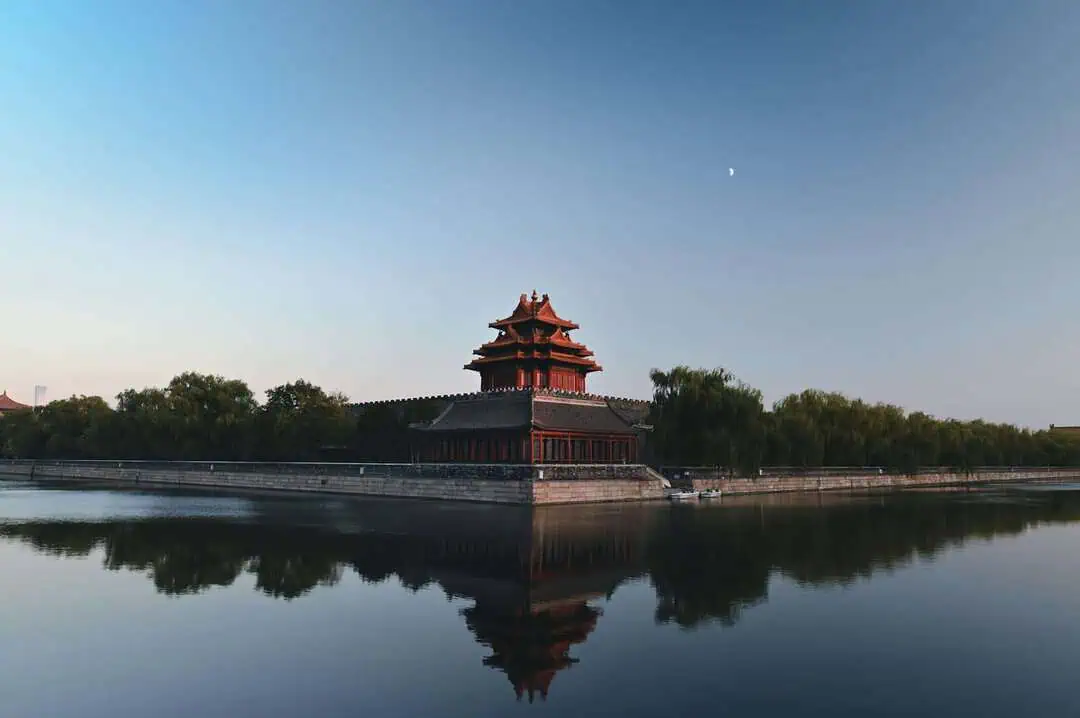
Daming Palace National Heritage Park
Dàmínggōng Guójiā Yízhǐ Gōngyuán
The Tang ruled an empire from here starting in 634 AD — a palace 4.5 times the Forbidden City, now foundations in a very large park.
Entry
From ¥60
Hours
Apr 15 – Oct 15 · 8:30
Time needed
2–4 hours
Metro
Line 4 · Daminggong (大明宫)
From 634 AD, Tang emperors ruled the world's biggest city from Daming Palace (大明宫, Dàmínggōng) — so here's the honest verdict: magnificent if you can summon Tang Chang'an in your imagination, skippable if you need standing buildings. What survives is the footprint of the grandest palace complex in Chinese history — rammed-earth platforms, gate foundations, an excellent site museum with a 1:15 scale model — set in a vast free park full of kite flyers. Tang-history people should come at sunset; everyone else can weigh it against a tighter schedule.
What you're looking at
For more than two centuries, this was the center of the Chinese world. Work began in 634 AD as a retirement palace that Emperor Taizong ordered for his father; Taizong's son Gaozong expanded it and moved the court here in 663, and seventeen Tang emperors went on to rule from Daming Palace. At roughly 3.5 square kilometers it was about 4.5 times the size of Beijing's Forbidden City — the grandest architectural complex of its era anywhere on earth, and the template studied by palace builders from Japan to Korea.
Almost nothing stands above knee height today. The palace burned and was dismantled in the wars that closed the Tang dynasty (the court was dragged off to Luoyang in 904), and Xi'an grew over the ruins. What's left, now that the park has cleared the later sprawl, is the skeleton: the colossal rammed-earth platform of Hanyuan Hall (含元殿, Hányuándiàn), where emperors held grand audiences and where you can still climb to a plain-wide view; the foundations of Danfeng Gate (丹凤门, Dānfèngmén), the great south gate, preserved inside a modern museum shell at the park's entrance; and long, quiet axes of lawn where halls once stood. The site became a UNESCO World Heritage property in 2014 as part of the Silk Roads listing.
Two indoor stops supply what the landscape can't. The Daming Palace Site Museum displays finds from the digs and a superb 1:15 scale model of the whole complex — the moment the place clicks for most visitors. The IMAX screen shows a slick dramatized film about the palace. Between them and the Hanyuan platform, you can rebuild the palace in your head; that mental act is the actual attraction here.
Visiting strategy
Decide honestly whether this is for you. If the City Wall or the Big Wild Goose Pagoda gave you what you wanted — real, touchable, standing history — Daming Palace may frustrate: it's an archaeological park, not a palace. If you've read anything about Tang Chang'an (our Tang dynasty guide is a good primer) and want to stand where it happened, the Hanyuan platform at golden hour is genuinely stirring. This is a site for imaginations.
Route: enter from the south at Danfeng Gate — the gate museum makes a strong orientation. Then move up the central axis toward Hanyuan Hall, either walking (about 20–30 minutes) or on the electric cart (~¥20, hop-on). Finish at the Site Museum and its scale model, so the landscape you've just crossed gets assembled into buildings. Two hours is a fair minimum; three to four if you do the museums properly.
Free vs paid: the outer park costs nothing and is a pleasure in itself — joggers, kite flyers, ballroom dancers on the plazas. The paid core (~¥60 combo) is where the history lives. If you're not going to buy the combo, treat this as a big scenic lawn, not a sight.
Timing: late afternoon into sunset, when the light flatters the earthworks and the local-life show switches on. In summer there is almost no shade — avoid midday. It's an easy second stop on a north-of-the-wall day, and it pairs oddly well with a hanfu photoshoot: Tang costume, palace axes, no crowds in your frame.
Getting there
The park sits just northeast of the City Wall, about 3 km from the Bell Tower — closer than it feels on the map.
- Metro Line 4 is the cleanest option: Daminggong station (大明宫) serves the west side near Danfeng Gate, while Hanyuandian station (含元殿) puts you nearer the Hanyuan Hall platform on the east. Line 4 also runs directly to Xi'an North station, so it slots neatly into a high-speed-rail arrival or departure day.
- DiDi or taxi from inside the wall costs about ¥15–25 and takes 10–15 minutes — see getting around Xi'an for app basics.
The park has multiple gates; tell your driver "Danfeng Gate" (丹凤门) for the classic south-side start, or the Site Museum if you're short on time and want the best hour of it.
Practical notes
- Sun and water: the grounds are exposed lawn and axis roads. Hat, water and sunscreen from May to September; there is little relief at midday.
- Distances: gate to platform to museum can total 3 km. The electric cart (~¥20) is money well spent, especially with kids or in heat.
- Food: nothing notable inside the park. Eat back in town — or save appetite for the evening.
- Toilets: at the main gates and beside the museums.
- Tickets: park entry is free; the ~¥60 combo (Site Museum + Danfeng Gate Museum + IMAX film) is bought at the core-area gates or on Trip.com/WeChat. Individual museum tickets run about ¥30.
- Trips: this slots into the quieter northern half of our 4–5 day trip better than into a compressed first visit.
Questions, answered
Is Daming Palace worth visiting?
It depends on what you need from a sight. If you want standing buildings, skip it — the Tang palace survives as platforms and foundations in a huge park. If Tang history fires your imagination, the Hanyuan Hall platform, the site museum's 1:15 scale model and the Danfeng Gate remains make it one of Xi'an's most atmospheric stops.
How much does Daming Palace National Heritage Park cost?
The park grounds are free. A combo ticket of about ¥60 covers the Daming Palace Site Museum, Danfeng Gate Museum and the IMAX film; individual museum tickets are around ¥30, and the sightseeing electric cart is about ¥20.
How big was the Tang dynasty's Daming Palace?
Roughly 3.5 square kilometers — about 4.5 times the area of Beijing's Forbidden City. Seventeen Tang emperors ruled from it between the 7th and early 10th centuries, making it the political center of East Asia for over 200 years.
How do I get to Daming Palace by metro?
Take Line 4 to Daminggong station (west side, near Danfeng Gate) or Hanyuandian station (east side, closer to the Hanyuan Hall platform). A DiDi from the Bell Tower area costs about ¥15–25.
How long should I spend at Daming Palace?
Two hours minimum for Danfeng Gate, the Hanyuan platform and the site museum; three to four hours if you include the film and take it slowly. Use the electric cart — the distances are bigger than they look.
What is there actually to see at Daming Palace?
The rammed-earth platform of Hanyuan Hall with its wide views, the preserved foundations of Danfeng Gate inside its museum, the Site Museum's excavation finds and 1:15 scale model of the palace, an IMAX film, and the free outer park's lawns and local life.
What to notice when you get there
The court seat of seventeen Tang emperors from 663 — a palace 4.5 times the size of the Forbidden City, now rammed-earth platforms and foundations in a vast free park, UNESCO-listed on the Silk Roads.
Almost nothing stands above knee height: the colossal Hanyuan Hall earthwork, long empty lawn axes, kite flyers on the plazas, and distances — 2–3 km gate to gate — that you feel in your legs.
Enter south at the Danfeng Gate museum for orientation, walk or cart up the axis to the Hanyuan Hall platform, and finish at the Site Museum's 1:15 scale model so the landscape clicks into buildings; late afternoon into sunset, avoiding summer midday.
Keep exploring
Dahua 1935
A 1935 cotton mill reborn as museums, graffiti walls and Xi'an's best-known livehouse — industrial heritage with a pulse.
3.5 km northeast of the Bell TowerLearn more →
Xi'an North Railway Station (high-speed hub)
Where every bullet train arrives — Asia-scale, but the route through it is fixed.
12.4 km north of the Bell TowerLearn more →

Tang Paradise
A royal Tang garden reimagined in 2005 — artificial, enormous, and genuinely beautiful after dark.
6.4 km southeast of the Bell TowerLearn more →

Xingqing Palace Park
Emperor Xuanzong's Tang pleasure palace, 1,300 years on — now Xi'an's favorite living room.
3.1 km southeast of the Bell TowerLearn more →

Qujiang Pool Heritage Park
The Tang dynasty's favorite party lake, lost for a thousand years and refilled in 2008 — evening jogs and poetry-stone sunsets.
6.7 km south of the Bell TowerLearn more →
Weiyang Palace Ruins (Han Chang'an)
The western Han empire's throne room, 2,200 years old, now a sea of grass
5.2 km northwest of the Bell TowerLearn more →

Terracotta Army
8,000 life-sized soldiers buried for China's First Emperor — and still on guard 2,200 years later.
33.3 km northeast of the Bell TowerLearn more →

Xi'an City Wall
A 14-kilometer Ming dynasty rectangle you can cycle on top of — 650 years old and still the city's favorite commute.
Inside the walls · 1 km southwest of the Bell TowerLearn more →

Sajinqiao Food Street
The food street Xi'an locals actually eat at — ten minutes' walk and a world away from the Muslim Quarter's tourist strip.
Inside the walls · 1.4 km west of the Bell TowerLearn more →

Shaanxi Archaeology Museum
China's first archaeology museum — not the treasures, but how they were found.
22.4 km south of the Bell TowerLearn more →
Gpark (Laochenggen)
Xi'an's open-air 'experience street' — where the city's west side eats, strolls and poses after dark.
2.4 km northwest of the Bell TowerLearn more →